
WRITTEN BY COCO SIN
A wedding invitation rarely tells a guest what to wear. It tells her how formal to be, and leaves the rest to interpretation — which is where the trouble begins.
SHOP COCOSIN WEDDING GUEST DRESS
The codes printed on a wedding invitation are a kind of shorthand. Some are old and well understood. Others are invented by the couple and mean something different to every person who reads them. The result is a familiar Saturday-morning scene: three women, three open laptops, three versions of the same question. What does this actually mean?
This is a guide to reading the invitation rather than memorizing a set of rules. Each code below is broken into three parts — what it asks for in practice, where the genuine flexibility sits, and the one line worth respecting. The principle underneath all of it is simple. When the wording is ambiguous, dress one notch more formal than casual, never the reverse.
Start with the invitation, not the closet
Before decoding a single word, read the two details that matter most: the time of day and the venue. They settle more questions than the dress code itself.
Daytime skews lighter — in color, in fabric weight, in mood. Evening leans darker and richer. A grand hotel ballroom asks for more than a vineyard at four in the afternoon, even when both invitations carry the same word. Stylists are consistent on this point: the setting and the hour should guide the outfit as much as the printed code does.
So the order of operations is: read the venue, read the time, then read the code. The code narrows the range. The venue and the hour place the guest inside it.
Black tie

What it asks for: The most formal code a guest is likely to receive, short of white tie. It signals an evening event and, traditionally, a floor-length gown. A refined ankle-length dress reads correctly too — the line worth knowing is that anything above the knee belongs to a less formal occasion.
Where the flexibility sits: In fabric and silhouette, not length. Satin, crepe, and velvet in cooler months photograph beautifully under evening light. A clean column, a draped back, or a high neck all sit comfortably inside the code.
The line worth respecting: Black tie is not the place to test casual fabrics. Cotton, linen, and anything that reads as daywear works against the formality the couple has asked for.
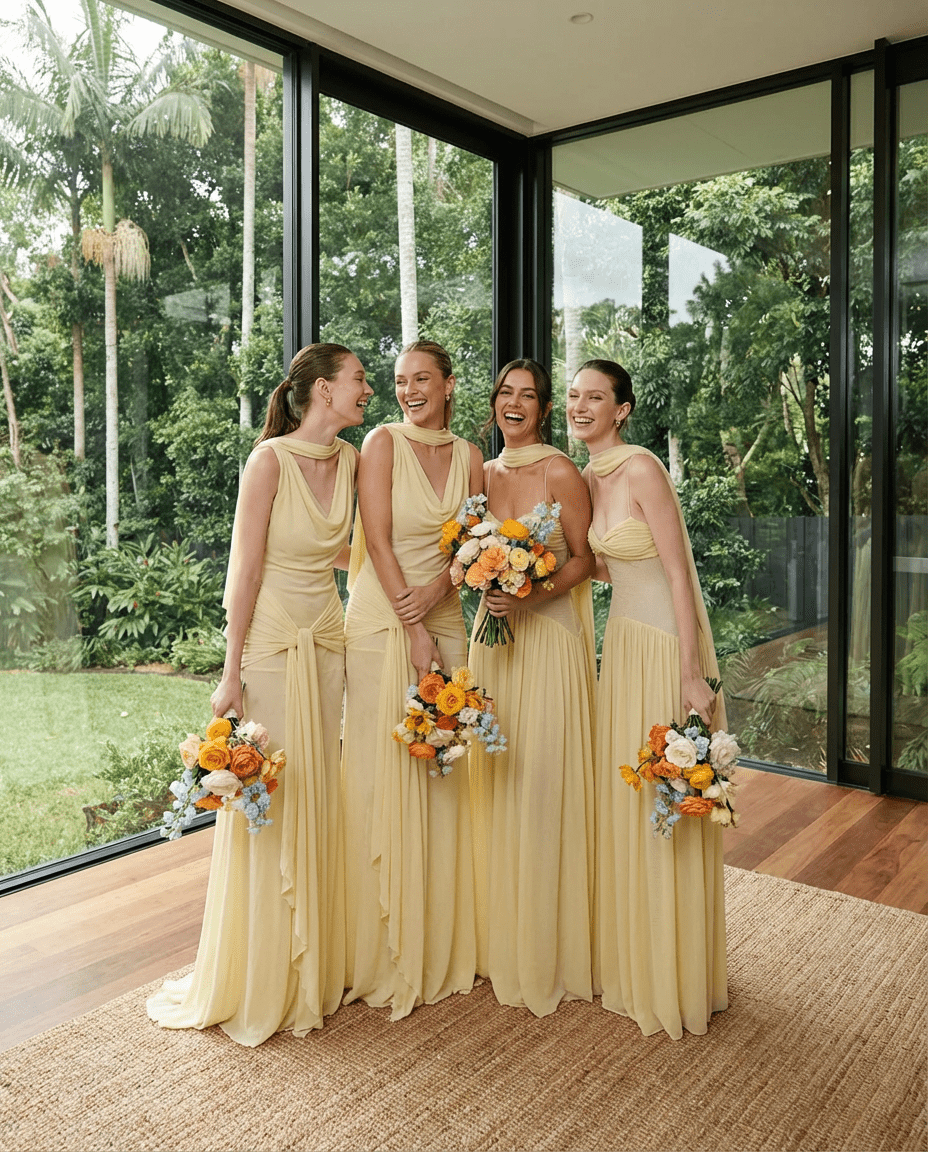
A draped floor-length silhouette in an evening fabric is the safest reading of this code. The Soléne Drape Maxi Dress — cut from a fluid mesh with a sculpted cowl neckline and a scarf detail that trails from the shoulder — belongs at this end of the evening: long, quiet, and built for movement.
Black tie optional

What it asks for: The same elevated feeling as black tie, with more room to move. A floor-length gown is welcome. So is a refined cocktail dress in an evening fabric, lifted with considered accessories.
Where the flexibility sits: This is the most generous of the formal codes. A midi in satin or silk, finished with a structured clutch and a single statement earring, reads as correct as a full-length gown. The flexibility is real — but it lives inside formalwear.
The line worth respecting: “Optional” modifies black tie, not formal. It does not open the door to casual. Relaxed footwear, denim, and daytime fabrics still sit outside the code.
The most common mistake here is taking the word optional too literally and arriving underdressed. The correction is small: keep the fabric formal and let the length be the variable. A clean, sculptural gown answers the code without ceremony — the One-Shoulder Ruched Gown, with its single shoulder line and gathered bodice, reads formal from across a room while staying easy to wear, and comes in a deep range of tones from black to butter yellow.
Formal

What it asks for: A sophisticated, typically indoor evening code that sits just below black tie optional. Floor-length and elegant midi dresses both work. The aim is sleek lines and a fit that looks intentional — polished, not theatrical.
Where the flexibility sits: In length and in color. A refined midi is entirely correct here, and the palette can move beyond the darkest tones, provided the fabric holds its structure in photographs.
The line worth respecting: Good tailoring does most of the work at this level. A simpler dress with a precise fit reads more formal than an ornate one that fits poorly.
A halter and cowl in a fluid mesh threads the needle between covered and quietly bare — the Mesh Halter-Neck Cowl Gown reads as formal without insisting on it, which is the register a formal wedding rewards. For guests who prefer a softer, draped approach, the Strapless Satin Maxi Dress arrives with a detachable sheer cape — covered for the ceremony, bare for the reception, one dress doing two jobs.

SHOP COCOSIN WEDDING GUEST DRESS
Cocktail

What it asks for: Possibly the most common code on a modern wedding invitation, and the most versatile. It is a step above semi-formal, distinguished mainly by hemline and fabric. The standard reading is a midi-length dress in an elevated fabric — satin, a high-quality crepe — rather than a floor-length gown.
Where the flexibility sits: In color and pattern, both of which are welcome here, and in length, which can run from knee to midi. This is the code with the widest range of acceptable answers.
The line worth respecting: Cocktail is not the dress one would wear to a cocktail bar. The fabric is what separates a wedding cocktail look from an ordinary evening out.
A draped dress with a clean back reads as considered rather than dressed-up. The Dune Glow Dress, with its draped silhouette and low cowl back, sits naturally in this register — present without tipping into gala territory.
“Dress as if the occasion deserves your full attention. Because it does.”
Semi-formal and dressy casual
What it asks for: The most relaxed of the standard codes, sometimes written as “dressy casual.” It carries virtually no length restrictions and welcomes lighter daytime fabrics. A polished daytime dress — a step up from business attire — is the correct register.
Where the flexibility sits: Almost everywhere. Length is open. Lighter fabrics and considered patterns are fine. The room to interpret is the point of the code.
The line worth respecting: “Dressy” is doing real work in “dressy casual.” The look should still read as made-an-effort, not off-duty.
Garden, beach, and the destination wedding

What it asks for: Outdoor and destination weddings shift the variables toward fabric and footwear. Lighter, breathable fabrics move better in heat and wind. The dress should still match the stated formality — a garden ceremony can be formal — but the materials adapt to the setting.
Where the flexibility sits: In fabric weight and in shoe choice. Block heels and wedges navigate grass and sand where stilettos cannot. A discreet wrap handles the temperature drop after sunset.
The line worth respecting: Outdoor does not mean casual. The setting changes the fabric, not the formality.
This is the category where fabric earns its place. AirMesh™, the stretch mesh developed in the COCOSIN atelier, holds its shape through heat and movement without the cling or crease that lets most warm-weather fabrics down by the end of a long day outdoors. It is the foundation of pieces like the Mesh Knit Twist-Waist Maxi Dress — a draped maxi with a twisted waist that travels well and reads correctly from an afternoon ceremony into the evening.
The invented codes
The harder confusion does not come from the standard codes. It comes from the ones couples write themselves. Garden elegant. Festive chic. Resort formal. Rustic glam. These phrases feel descriptive, but they have no agreed-upon meaning — each guest reads them differently, which is precisely why they cause anxiety.
The way through is to translate the invented phrase back into the nearest standard code, then read the venue and the hour. Garden elegant at an afternoon vineyard is cocktail with lighter fabric. Festive chic at an evening reception leans toward formal with a celebratory detail. Resort formal is cocktail-to-formal in fabrics built for warmth.
When the invented code resists translation entirely, the couple’s wedding website usually settles it — and when it doesn’t, dressing to the more formal reading is the lower-risk choice.
SHOP COCOSIN WEDDING GUEST DRESS
A note on color

A few colors carry their own quiet rules. White, ivory, and cream belong to the bride; they sit outside every guest dress code regardless of formality. Black is correct for evening and city weddings and reads as sophisticated rather than somber — for a traditional daytime ceremony, a softer shade or a dress with some detail reads warmer. Bright red divides opinion: it works at an evening or black-tie wedding and can feel attention-seeking at a daytime church ceremony.
Metallics deserve their own mention. A bronze or gold tone catches evening light in a way that reads celebratory without competing with the couple — a dress like the Bronze Goddess Dress is built for exactly the kind of evening reception where a deeper, warmer shade belongs. None of these rules are absolute. But they are the colors most likely to draw a second glance, which makes them worth a moment’s thought before the rest of the outfit comes together.
Frequently asked questions
What is the difference between black tie and black tie optional?
Black tie asks for the most formal evening wear — traditionally a floor-length gown in an evening fabric. Black tie optional keeps the same elevated feeling but widens the range: a refined cocktail dress in satin or silk, lifted with considered accessories, reads as correctly as a full-length gown. The word optional modifies how formal, not whether to be formal. Both codes stay firmly inside formalwear and away from casual fabrics like cotton, linen, and denim.
Can a midi dress work for a formal or black-tie-optional wedding?
Yes, at black tie optional and formal — provided the fabric is right. A midi in satin, silk, or a structured crepe, finished with elegant accessories, sits comfortably inside both codes. The fabric is what carries the formality when the length is shorter than floor-length. For a strict black tie wedding, floor-length is the safer reading, though a refined calf-length dress can also work.
What does cocktail attire actually mean for a wedding?
Cocktail sits one step above semi-formal and is distinguished mainly by hemline and fabric. The standard answer is a midi-length dress in an elevated fabric — satin or a high-quality crepe — rather than a floor-length gown. Color and pattern are both welcome. The key distinction: a wedding cocktail dress is separated from ordinary evening wear by the quality of its fabric, not by how short it is.
How should a guest read invented dress codes like “garden elegant” or “festive chic”?
Translate the invented phrase into the nearest standard code, then let the venue and time of day narrow it. “Garden elegant” at an afternoon ceremony reads as cocktail in a lighter fabric; “festive chic” at an evening reception leans toward formal with one celebratory detail. When a phrase resists translation, the couple’s wedding website usually clarifies — and when in doubt, dressing to the more formal reading carries the lower risk.
Is it acceptable to wear black to a wedding?
Black is entirely acceptable for evening and city weddings and reads as sophisticated rather than somber. For a traditional daytime ceremony, a softer shade or a black dress with some detail or texture reads warmer and more celebratory. The setting and the hour decide. White, ivory, and cream are the colors to avoid at any wedding, regardless of dress code — those belong to the bride.
What should a guest wear to an outdoor or destination wedding?
Match the stated formality, but adapt the fabric and footwear to the setting. Lighter, breathable fabrics move better in heat; block heels and wedges navigate grass and sand where stilettos cannot. A discreet wrap handles the temperature drop after sunset. Outdoor does not lower the dress code — a garden wedding can be formal — it simply changes the materials that read correctly in the conditions.
What is the safest choice when the dress code is unclear?
Dress one notch more formal than casual, never the reverse. An overdressed guest reads as having taken the occasion seriously; an underdressed one is the more common regret. Read the venue and the time of day first, translate any unfamiliar wording into the nearest standard code, and when two readings are possible, choose the more formal one.
SHOP COCOSIN WEDDING GUEST DRESS
For the full edit of warm-weather options, see Summer Wedding Guest Dresses. For the fabric that does most of the work at an outdoor ceremony, see Inside AirMesh™. To browse by formality, see the Black Tie Wedding, Cocktail Wedding, and Destination Wedding edits.