
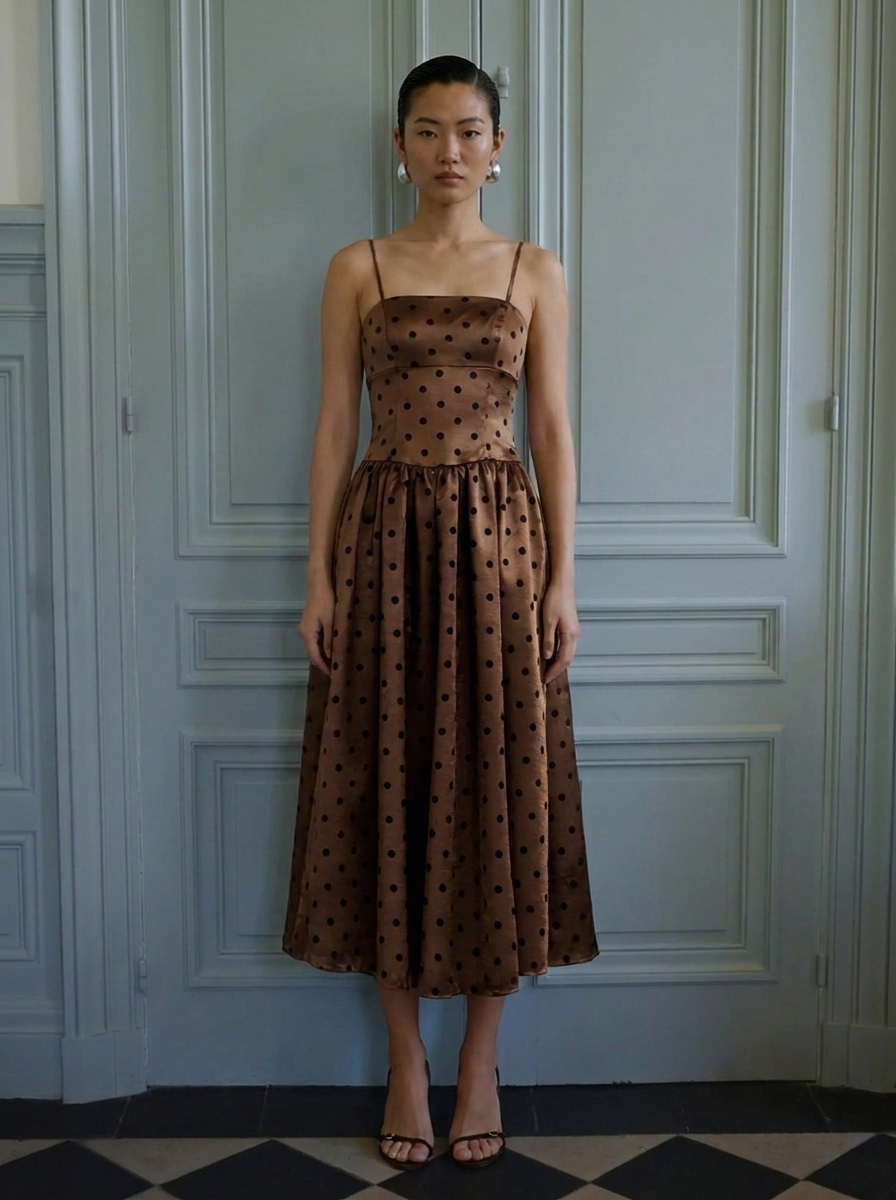
What is cocktail attire for women? It is dressed-up occasionwear with room for personal choice: a polished dress, an evening jumpsuit or considered separates, finished with shoes and accessories that suit the event. A knee-length or midi dress is an easy starting point, but the invitation, venue and fabric matter more than a single hem rule.
This guide explains the code for parties, receptions and dinners, with wedding-specific notes where they matter. COCOSIN offers occasion dresses to compare once you know the level of formality you need. Start with the event itself rather than treating every celebration as an invitation to wear the longest gown.
What the dress code asks for
Cocktail attire sits in the space between ordinary day clothes and the most formal eveningwear. The Emily Post Institute's attire guide places cocktail dresses and dressy separates under semi-formal attire. Hosts use those terms with some variation, so their invitation remains the best guide.
Look for a considered outfit rather than a set of compulsory items. A clean neckline, deliberate proportions and a fabric that suits the setting can do more than an elaborate accessory. You do not need a plunging neckline, a short hem, high heels or visible sparkle to meet the code.
Think about how you will spend the evening. A gallery reception may involve standing and moving around the room. A dinner party asks for an outfit that works seated. A wedding can include a ceremony, outdoor photographs and dancing. That sequence gives you more useful information than the word “cocktail” on its own.

Read the invitation in three passes
First, find the exact dress-code wording. “Cocktail,” “festive cocktail” and “black tie” should not automatically lead to the same outfit. If the invitation says cocktail, begin with an occasion dress or dressy separates. If it says black tie, look at the more formal choices described in the host's guidance.
Next, check the setting. A private dining room, an outdoor terrace and a ballroom create different clothing needs even when the dress code is identical. Ask whether you will walk on grass, stand outside or move between venues. None of these details requires a new wardrobe, but each can change your shoes or outer layer.
Finally, check any specific requests. A host may name a color palette, ask for covered shoulders during a ceremony or explain that the reception will be outdoors. Follow those details before a general internet rule. If a phrase is unclear, a short question to the host or organizer can settle it before you order something unsuitable.
Choose a length that works in motion
A midi gives you a useful middle ground: it looks dressed for an occasion while keeping the hem away from the floor. Try it with the actual shoes you plan to wear. “Midi” describes a category, not an exact position on every body, so check the listed garment length and where it falls on you.
A shorter dress can also work when the cut and fabric suit the setting. Sit down, climb a step and reach forward during the try-on. If the hem demands attention each time you move, you may prefer another length. This is about your comfort with the outfit, not a rule about age or body shape.
A long dress needs a little more judgment. A simple, fluid maxi may feel right at one cocktail reception, while a heavily formal gown may look out of step at another. Consider its neckline, volume, surface detail and train as well as its length. When uncertain, a polished midi is often easier to adapt.
For a close-fitting style, check the hip and waist while seated. For an A-line skirt, check how much space it takes when you turn around a chair. The aim is to choose a silhouette you enjoy wearing through the whole event, not one that only works while standing still.
Use fabric, color and detail deliberately
Fabric changes the character of an outfit. A smooth dress with a clear shape can feel different from a relaxed daytime style even if the lengths match. Look at the product photographs from several angles, then read the composition and fit notes. A material name or a glossy photograph cannot tell you everything about weight, stretch or opacity.
When a COCOSIN product is made in LumiSatin™ or AirMesh™, use that product's own description to understand the material. Do not assume all dresses share the same composition. The brand's cocktail wedding collection is one place to compare silhouettes, but each product still needs its own size and fabric check.
Black can give you a straightforward starting point, while a color you already enjoy wearing can feel more personal. A print can work too. Before adding several accessories, decide which feature should draw attention: the neckline, the fabric, the sleeve or the jewelry. Leaving the other elements quieter makes the outfit easier to judge.

Consider The Sienna Dot Midi Dress: its straight neckline and narrow straps sit above a structured bodice and full tea-length skirt. The coffee-brown fabric with black dots keeps the print distinct from bridal white. For a restaurant reception, try a black slingback and a small dark bag, letting the print carry the outfit. For a reception on grass, switch to a block-heeled sandal suited to the ground. Follow the invitation if the hosts request a particular palette.
You can choose trousers or separates
A dress is not your only route to cocktail attire. Consider tailored evening trousers with a dressy top, a coordinated skirt and blouse, or a jumpsuit with a deliberate silhouette. Judge the whole outfit together rather than relying on one formal-looking item to carry otherwise casual pieces.
Fit at the waist and the relationship between top and bottom matter. If the trousers are full, see whether a more defined top gives you the proportions you prefer. If the top has volume or a detailed sleeve, try a cleaner lower half. These are styling options, not requirements to create one particular body shape.
Try separates while sitting and reaching. Check whether the top stays where you want it and whether a tucked hem pulls out. With a jumpsuit, consider how easy it is to fasten and remove without help. Those details can make an outfit much easier to wear during a long event.
Finish with shoes, a bag and a useful layer
Choose shoes for the actual route through the event. Dressy flats, low heels or higher heels can all be considered as part of the outfit. Test the pair at home before relying on it for a long reception. If there is a lawn or gravel path, decide how you will manage that surface before leaving.
A compact bag should hold what you need without becoming something you repeatedly rearrange. Try it with the dress: a rough chain or sharp decoration can catch a delicate surface. A simple shoulder bag may be easier than a clutch when you need your hands free, provided it works with the outfit.
Choose the outer layer at the same time as the dress. Check how it sits over straps or sleeves and whether you can put it on without disturbing the neckline. An outdoor arrival followed by an air-conditioned dining room may call for a layer even when the forecast looks warm.
For a New York wedding with multiple stops, New York Bus Company outlines wedding shuttle options. Use the hosts' confirmed travel arrangements to plan your footwear and layer; a venue's address alone does not tell you how much walking the evening includes.
Make the final wedding and care checks
For weddings, read the couple's notes about color and ceremony coverage. White, ivory and cream need their explicit request or approval. If you are attending a religious ceremony, check its guidance rather than assuming a sheer wrap meets the expectation. COCOSIN's cocktail wedding dressing guide addresses that setting in more detail.
Set aside time for care and preparation before the event. The Federal Trade Commission's care-label guidance explains the role of garment-specific instructions. Follow the label instead of applying a generic washing or ironing method to every occasion dress.
Try the finished outfit once more after any permitted preparation. Check the neckline, hem, fastenings and shoes together. Put your chosen layer and bag beside the dress so that getting ready does not become a last-minute search for pieces that work.
Questions about cocktail attire
Do women have to wear heels for cocktail attire?
No. Consider dressy flats or a low heel if that is what you prefer. Choose a pair that looks intentional with the outfit and works for the venue. A shoe you can walk in is more useful than one you expect to remove immediately.
Can I wear black to a cocktail wedding?
Check the couple's stated preferences and any cultural guidance. Black can be appropriate in many settings, but it is not a reason to disregard a requested palette. Consider the entire outfit, including fabric and accessories, rather than the color alone.
Is cocktail attire the same as black tie?
No. Treat a black-tie invitation as a more formal request. If that is the code on your invitation, compare COCOSIN's black-tie wedding guidance before choosing the same outfit you would wear to an informal reception.
Can I wear a patterned dress?
Yes, if its cut and fabric suit the event. For weddings, check whether the background color could read as white or bridal. For other celebrations, follow any palette or theme supplied by the host.
What if the invitation gives no dress code?
Ask the host or organizer, using the venue and timing as context. A quick clarification is better than guessing from a photograph of the venue. Once you know the expected formality, choose the outfit you can comfortably wear for the full event.
Choose your cocktail look
Start with the invitation, choose a shape you can move in and finish with shoes and a layer suited to the venue. Explore COCOSIN wedding guest dresses for current occasionwear options.


