The Season I Design Hardest For
Summer is the season I design hardest for. A note on why almost every wedding-dress disappointment is a fabric problem in disguise — and how a small wardrobe, not one dress, survives a season.
6 min read
Summer is the season I design hardest for.
The weather demands more of the fabric. The photographs are more permanent than at any other time of year — outdoors, in clear light, against backgrounds that don't forgive a wrong choice. And the calendar compounds on itself: three weddings in eight weeks, four if the bride is from out of town, five if there's a destination weekend in the middle. By the time June arrives, the dresses are doing real work.
I have been designing COCOSIN for thirteen years. The pieces that come out of our studio for the late-summer calendar always carry more weight than the pieces I design for any other quarter. They have to. The customers I hear from in April and May are usually three or four weddings deep into the planning — a garden ceremony in Sonoma, a coastal weekend in Charleston, a black tie reception under chandeliers somewhere in September. The question they bring me is always some version of the same one: what do I wear? Beneath it, almost always, sits a harder question. And how do I make this work across all of them?
The answer rarely has to do with picking one dress. It has to do with how a wardrobe gets built to survive a season.
Where the category fails its customers
For a long time I've watched this category fail its customers in exactly the same way. The cut looks right in the photograph. The price reads serious — $250, $300, sometimes more. Then the dress arrives. The chiffon turns out to be plastic. The bodice prints sweat lines under stage lights at the rehearsal dinner. The fabric clings in humidity, billows in breeze, wrinkles the moment a guest sits down to dinner. By the time the reception starts, the dress is already on its way to becoming the regret hanging at the back of the closet.
I've read the reviews across the category — every premium label, every customer-facing site that publishes them. The complaint repeats. Different brand, identical comment. It is the most-cited customer complaint in the premium wedding-guest dress category, and it does not go away by raising the retail price.
The disappointment isn't bad luck. It's the structural economics of fast-cycle production at scale. Most of the brands competing in this category are working backwards from a target margin — choosing a fabric on the basis of cost, sampling at a unit price that doesn't allow the maker to use anything else. The aesthetics arrive first. The fabric arrives last. The customer arrives at the wedding wearing the consequence.
I start from the opposite side of the problem
When I started designing COCOSIN's wedding pieces, I worked from the opposite side of the problem. The questions I ask first are about fabric, not silhouette. Does it breathe in heat? Does it sculpt without compressing? Does it drape without going sheer? Will it photograph fluid in midday sun against pale stone? Does it recover from being sat in for four hours at a reception dinner? When the answers come back yes, the silhouette gets designed around the fabric — never the other way around.
This is the reason we developed AirMesh™, our body-adaptive stretch mesh. It was built specifically for what a summer wedding-guest dress actually has to do, not what it looks like in a flat photograph. The material breathes in heat, holds its shape through a long evening, drapes without going sheer in stronger light, and recovers from a flight and a roller bag. It is the material I keep coming back to because it answers the right questions.

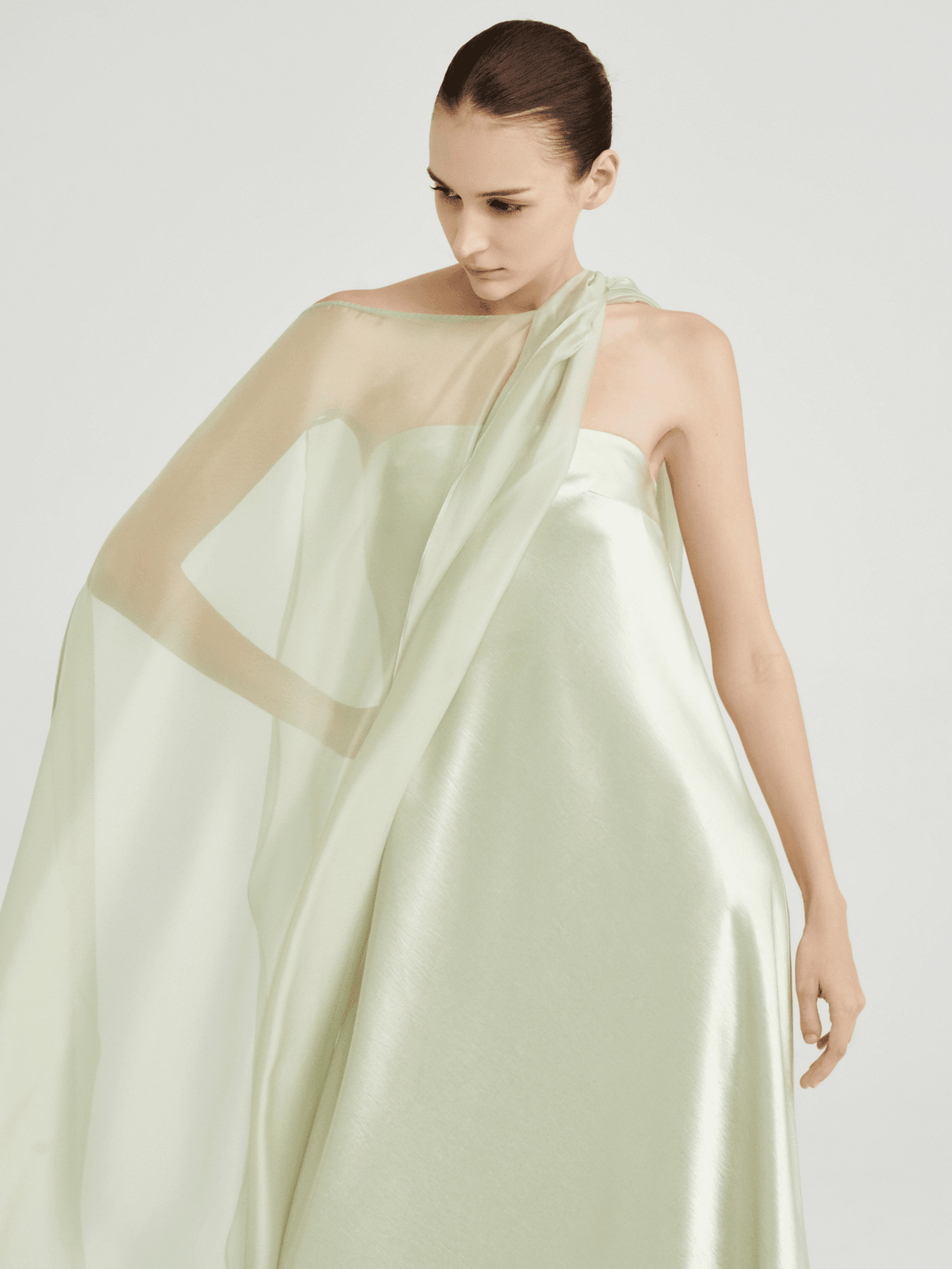
The pieces are made in our atelier by women who have spent careers in the workrooms of some of the world's most recognized fashion houses. The makers know how a satin column should hold its line against breeze, how a halter should sit against the collarbone, how a cowl needs to weigh enough to fall correctly without dragging. The construction is doing as much of the work as the cut. The customer rarely sees this, but she feels it the first time she puts the dress on.
Almost every disappointment is a fabric problem in disguise.
The brief is a wardrobe, not a dress
What I want women to understand about summer wedding dressing is that almost every disappointment is a fabric problem in disguise. The cut and the colorway pull the eye in the photograph. The fabric decides whether the dress shows up to do its job.
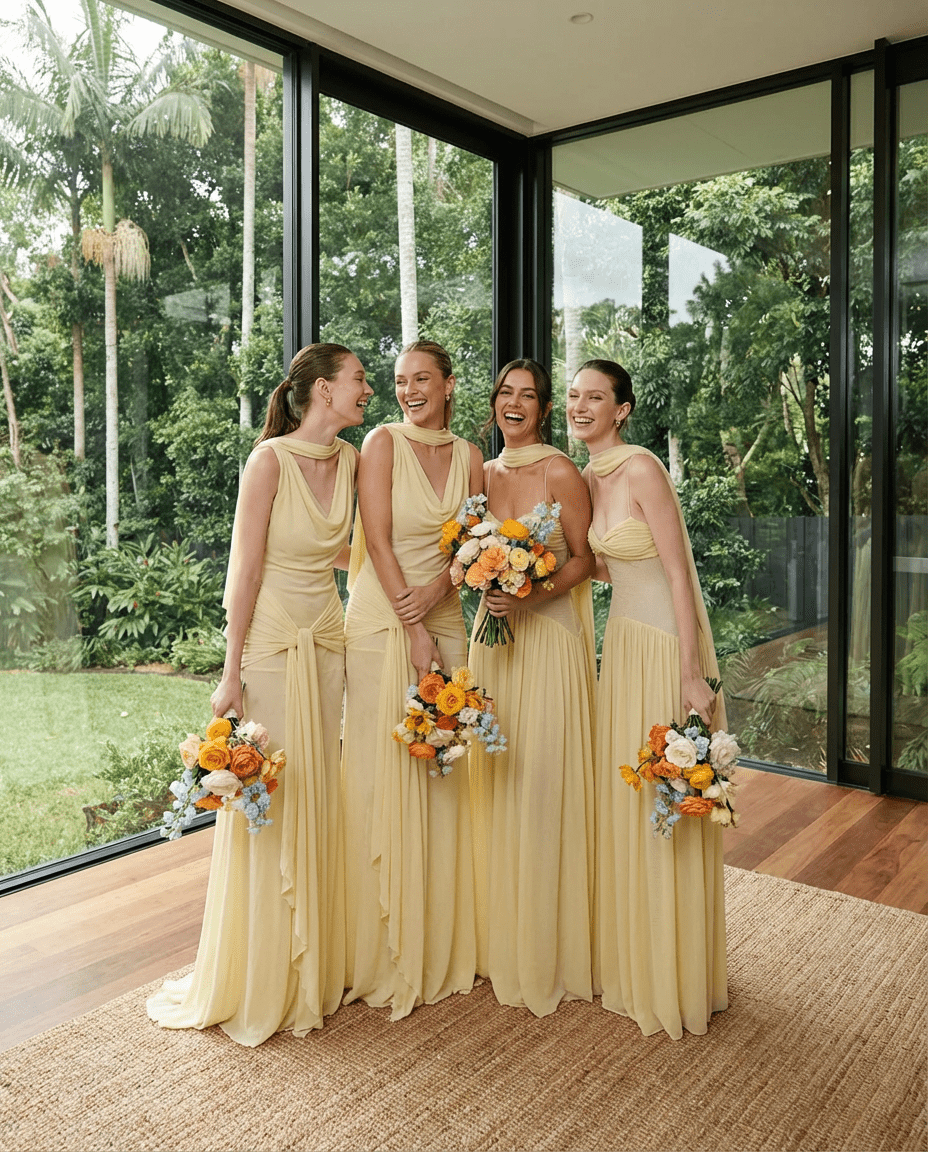
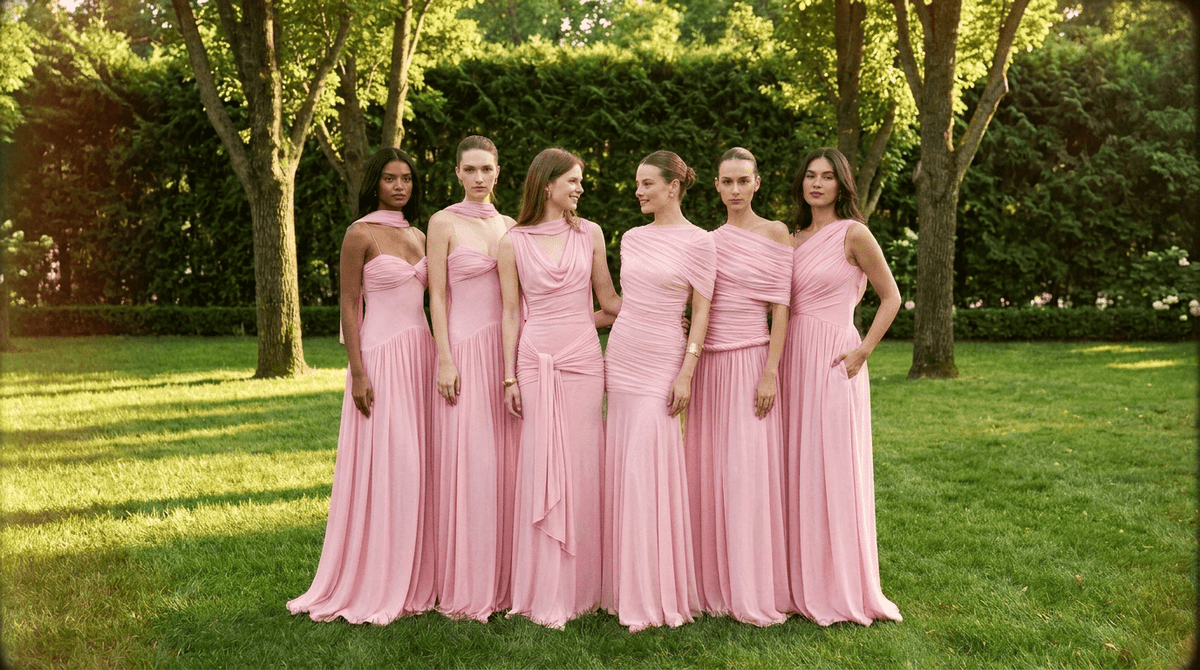
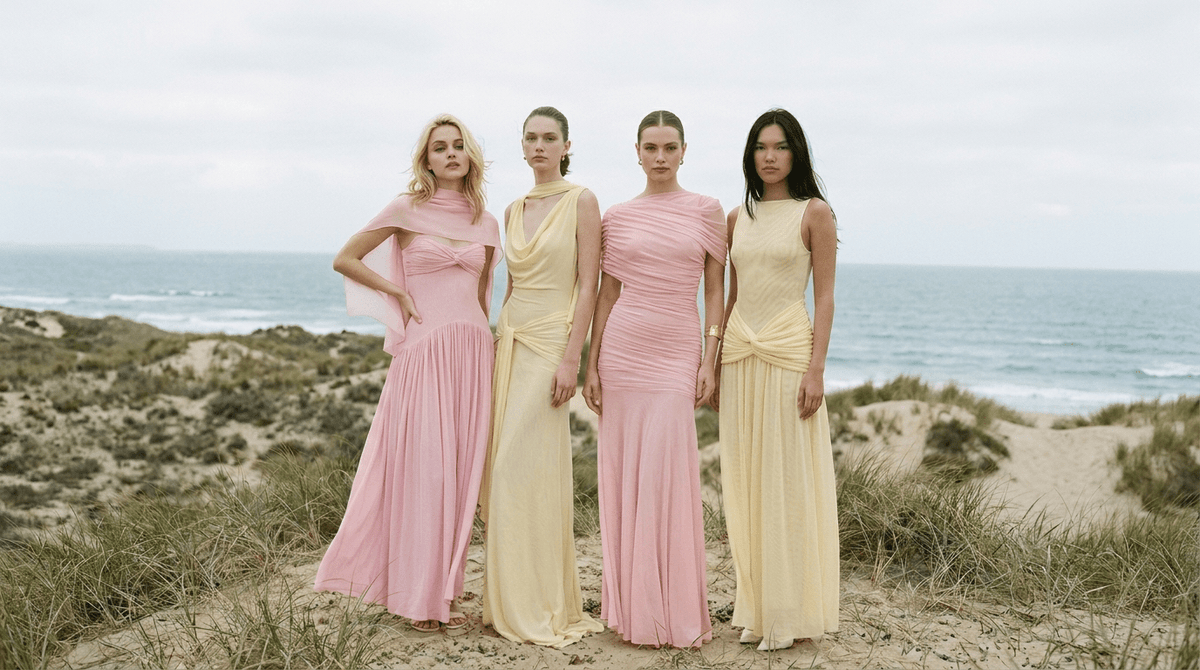
The brief I design against is not one dress, one wedding. It is a wardrobe that handles four. A garden ceremony in June. A coastal reception in July. A black tie evening in August. A destination weekend in September. These are different climates, different photographic registers, different formality settings. They aren't solvable by one piece. But they are solvable by a small handful of pieces, in fabrics that travel and re-wear, in colorways that flatter across contexts. This is the thinking behind the full summer wedding guest dresses edit.
Three or four dresses. Twenty weddings. Two or three summers. This is what we are designing for. Not one dress, four times. A small wardrobe, twenty times.

What the dress carries forward
Every wedding leaves a small residue — what you wore, how you felt, who you stood next to in the photograph that ended up on someone's wall. The dress is not the most important thing about that day. But it is a thing the day carries forward. It becomes part of the wedding's memory as much as yours.
That is the part of the brief I never lose sight of. The dress has to be photograph-ready in twenty years' time, not just on the Saturday it gets worn. The fabric has to be honest. The silhouette has to be confident enough to disappear — to let the woman wearing it actually be present at someone else's most important day.
This is why summer is the season I design hardest for. The pressure is real, the stakes are real, and the photographs are real. The fabric does most of the work. The maker does the rest. What's left, when those two things are right, is a small piece of clothing doing what clothing is supposed to do — letting a woman walk into a room and stand inside her own life.