What to Wear to a Black Tie Wedding: A Guest's Guide
Black tie asks a guest for a floor-length gown. What that means in practice: length, fabric and color, season by season, and how far black tie optional lets you go.
14 min read
What to wear to a black tie wedding comes down to one rule: a floor-length evening gown in an evening fabric, such as satin, taffeta, crepe or a draped stretch mesh. Black, deep reds and jewel tones suit the evening, and soft pastels are just as correct in summer; white, ivory and cream stay with the bride. An ankle-length dress also works. A knee-length one does not. That answer settles most invitations, and the details around it decide whether a look feels right on the night. A midsummer ceremony in a garden asks for a different fabric from a midwinter reception in a ballroom. A beach venue changes the shoes. And "black tie optional" opens a door that is narrower than it looks.
What black tie means for a guest
Black tie is an evening dress code. The name comes from the bow tie worn with a tuxedo, and it tells guests the event is formal and will run late: traditionally it starts after six, with dinner, speeches and dancing. For women, the code traditionally means a full-length evening gown. Modern black tie allows more range in cut and color than it once did, but length and fabric are still where the code is read first.
It helps to see black tie beside its neighbors: one step below white tie, which is rare at weddings, and one step above black tie optional.
| Dress code | Length | Fabric and finish | What it means for a guest |
|---|---|---|---|
| White tie | Floor-length gown | Satin, taffeta, silk; long gloves are traditional | The most formal code; rare at weddings |
| Black tie | Floor-length, ankle-length at the shortest | Satin, crepe, taffeta, draped mesh, velvet | An evening gown; this guide |
| Black tie optional | Floor-length, or a polished midi or tea-length dress | The same evening fabrics | The hosts dress black tie; guests may go one step down |
A formal two-piece also works at black tie: a floor-length skirt with a matching or tonal evening top reads as a gown when the two fabrics share the same weight and finish. What doesn't work is a dress that would look at home at any Friday dinner. Black tie asks a guest to dress for the occasion, not just for the evening.
Length, silhouette and neckline
Length
Floor-length is the standard. In the shoes you will wear, the hem should graze the top of the foot or brush the floor. Ankle-length, with the hem at or just above the ankle bone, is correct at most black tie weddings. Midi and tea-length dresses belong to black tie optional, and anything at the knee belongs to cocktail attire.
Length is the detail most likely to surprise a guest buying online. Product pages list the dress's full length: most of the floor-length gowns among COCOSIN's black tie wedding guest dresses measure about 145 cm (57 in) overall, and each page gives the exact figure. Compare it with a dress you already own that falls where you want it. Stretch fabrics follow the body, so a stretch gown can sit shorter on a fuller bust or hips than it does on the model; if length matters, email [email protected] with your height, bust, waist and hips before ordering. Then try the dress with the actual shoes, because a hem that is right in flats will float above the floor in a four-inch heel.
Silhouette
Black tie doesn't require a ball gown. A sleek column, a draped or ruched sheath and a fluid A-line are all as correct as a full skirt, and easier to wear through a three-course dinner and a crowded dance floor. Choose the silhouette for the evening you will actually have: a long table, a band, perhaps a staircase for the photographs. A gown that needs holding up to walk will be held up all night.
Neckline
The neckline carries most of the personality of a black tie look, because the length is already decided.
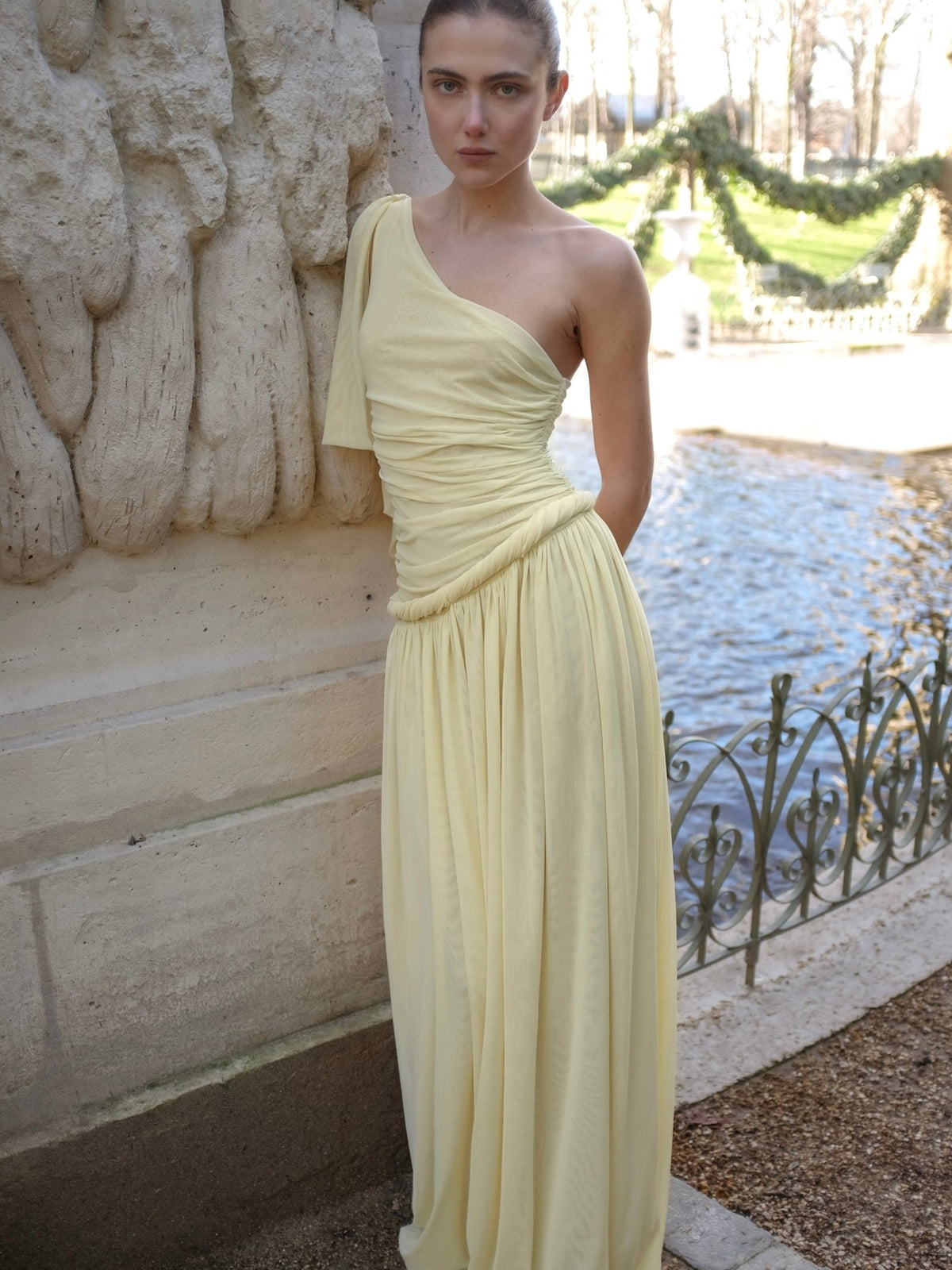
One-shoulder is clean and modern, and it leaves room for a statement earring on the bare side. The One-Shoulder Ruched Gown is ruched through the bodice above a floor-length skirt, in black, red, blue, pink or butter yellow.

Halter necklines show the shoulders and often the back, which suits a warm evening. The Muse Mesh Halter Gown twists a sweetheart neckline into a halter tie above an open back, in AirMesh™, COCOSIN's stretch mesh. The Mesh Halter-Neck Cowl Gown, also in AirMesh™, pairs halter straps with a soft cowl neckline and a ruched bodice.
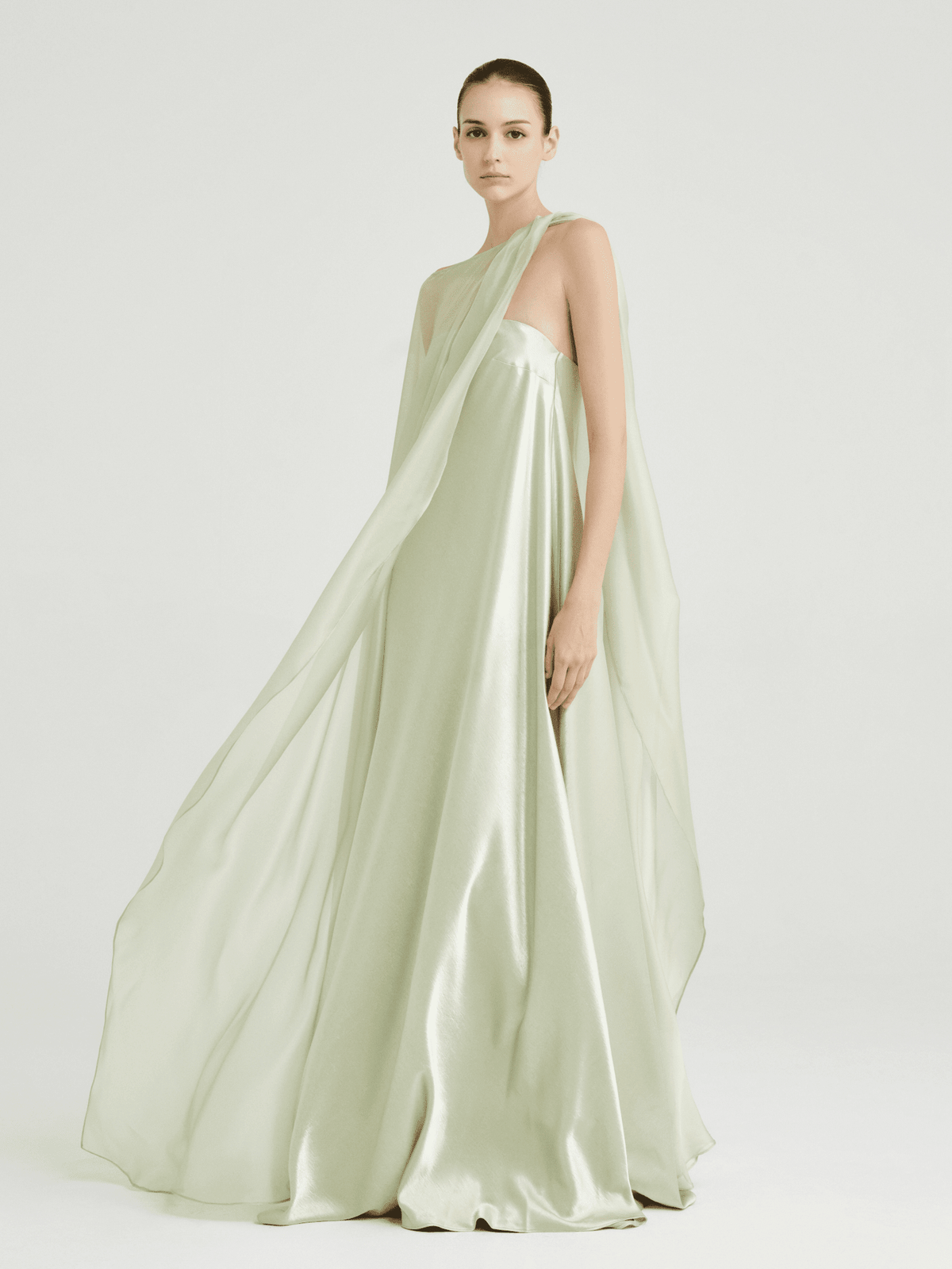
Strapless reads formal at once, and it is the easiest neckline to cover for a ceremony: add a wrap or a cape for the vows and take it off for the reception. The Strapless Satin Maxi Dress with Sheer Cape Overlay is built around that idea, with a detachable sheer cape that drapes over the shoulders, ties at the neckline or comes off entirely.

Cowl necklines drape rather than cling, and they move well in candlelight. The Liora Backless Satin Gown carries a cowl at the front into a deep drape at the back.
A slit, a cutout or an open back all sit comfortably inside black tie on a floor-length gown. The useful rule is to let one revealing element lead: a high slit with a covered back, or an open back with a simple skirt.
Fabrics that read black tie
Fabric does more to set the formality of a gown than any other detail. Two dresses with the same cut can sit two dress codes apart because one is satin and the other is cotton.
Satin catches light, holds color deeply and reads formal in photographs, which is why it has dressed black tie evenings for generations. Silk satin is the traditional version; polyester satins give a similar sheen and are easier to care for. COCOSIN's is LumiSatin™, a satin with a liquid sheen: the Liora Backless Satin Gown and the Strapless Satin Maxi Dress with Sheer Cape Overlay are cut from it, as are most of the satin dresses. Satin creases in a suitcase, so steam it on low before the evening.

Draped mesh and jersey are the modern alternative. A stretch mesh drapes close to the body, weighs very little and breathes through a long night. That makes it the better choice for summer, for a warm room and for anyone who intends to dance. AirMesh™ (90% polyamide, 10% elastane) is COCOSIN's version, explained in more detail in AirMesh™, the fabric story. Matte stretch fabrics, such as a soft Tencel blend, read just as formal when the cut is long and clean.
Taffeta is crisp and holds a sculpted shape: a full skirt, a structured bodice, a bow that stays where it was tied. It suits the most traditional evenings and photographs with real presence.
Velvet is the cold-weather choice: warm, deep in color and unmistakably formal through the winter months.
What to avoid: cotton, linen, casual jersey and anything that would read as daywear. A beautiful linen maxi dress is still a daytime dress, and black tie is the one code where the difference shows.
Color at a black tie wedding
Black is correct at an evening black tie wedding and one of the most worn choices. "Black tie" describes the men's dress, not a color rule for guests. For a daytime ceremony, a religious service or a family with strong traditions, deep red or burgundy is a softer alternative with the same formality.
Deep and jewel colors are where black tie is most generous: burgundy, deep red, plum, emerald, sapphire, chocolate brown and olive all read correctly after dark, and satin's sheen deepens them.

Metallics belong at evening black tie, particularly in the holiday season. Keep the shine to one element, the whole gown or the accessories, not both. The Metallic Muse Mesh Halter Gown puts it in the fabric itself: an iridescent metallic mesh with a ruched sweetheart neckline and a trailing scarf overlay.
Pastels and soft colors are as correct as black in summer and at garden venues. Pink, butter yellow and powder blue in satin or draped mesh read formal because of the fabric and the length, not the shade.
What to avoid: white, ivory, cream and anything that photographs close to them, in every season. If the couple has shared a color palette, or named the bridesmaids' color, choose a shade that complements it without matching it. Prints are rare at strict black tie; save them for black tie optional or cocktail invitations.
Black tie by season and setting
The dress code stays the same all year. The weather, the venue and the hour change what it takes to meet it comfortably.
Summer black tie
A summer black tie wedding asks the most of a fabric. Long daylight, heat and an outdoor ceremony mean a gown has to stay comfortable for six hours or more, so weight matters more than at any other time of year. Light stretch mesh is the strongest choice, with fluid satin for an evening reception indoors. Open backs, halters and bare shoulders all suit the season, and soft colors are entirely correct before the sun goes down.
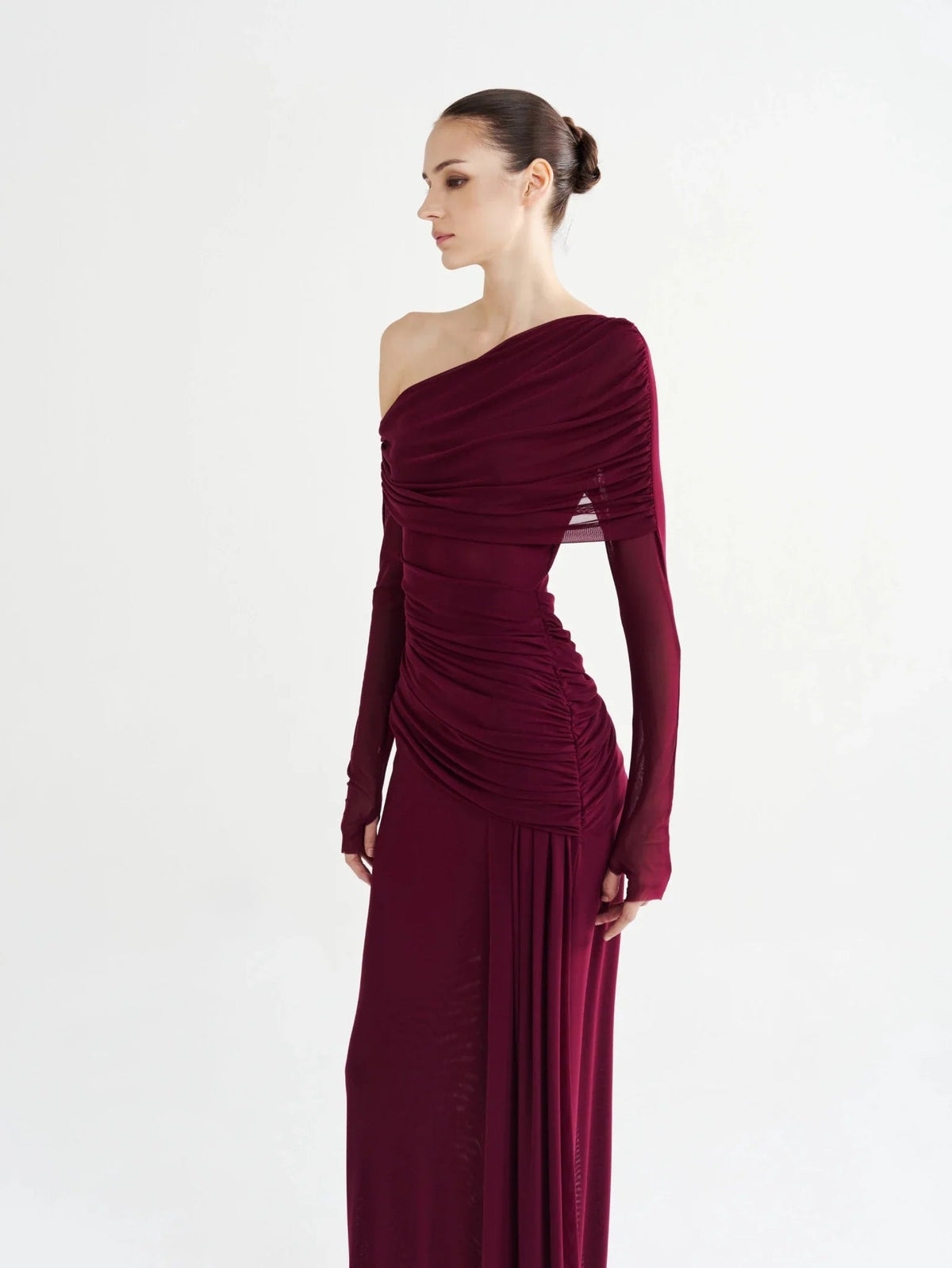
The Solène Drape Maxi Dress is a summer answer in AirMesh™. It has a cowl neckline, soft gathers at the waist and an attached scarf that falls behind or ties at the shoulder, and it measures 155 cm overall. The Elysia Asymmetric Mesh Dress, in blue or red AirMesh™, hangs from spaghetti straps with a fluid drape across the bodice and down one side, ruched at the waist and hips.

Plan for the temperature drop after sunset, especially near water or in the hills. A wrap in the same color family as the gown handles it without changing the look.
Fall and winter black tie
Cold-weather black tie favors deeper colors, heavier fabrics and some coverage. Sleeves are welcome but not required: a sheer long sleeve, a wide half sleeve or a cape all keep a gown in evening territory. The Deep V-Neck Satin Maxi Dress, in black or brown LumiSatin™, balances wide half sleeves with a plunging neckline. The Strapless Satin Maxi Dress does the same job with its detachable cape, in burgundy red, olive green, brown and purple among other colors. The guide to long sleeve wedding guest dresses covers sleeves, capes and coats in detail.
Sheer tights and closed-toe evening shoes are accepted at most winter black tie weddings, and they make a long night noticeably more comfortable. For the arrival and the photographs outside, a long tailored coat in a dark neutral works over almost any gown.
Beach and destination black tie
A black tie beach wedding keeps the formality and changes the practicalities. Floor-length is still expected, but a hem that drags in sand will be ruined by the first dance. Choose a gown that falls at the ankle or lifts easily, in a fabric that moves with the wind rather than fighting it. Shoes matter more here than anywhere: block heels, wedges or dressy flat sandals, never stilettos. For travel, roll the gown rather than folding it, and pack a travel steamer.
City, hotel and ballroom black tie
The most traditional setting gets the most traditional reading. A ballroom or a city hotel suits black or a deep color, satin or a sleek drape, and minimal, precise jewelry. This is where a long black gown is at its best. The Black Cut-Out Dress is a one-shoulder black evening gown in a soft Tencel stretch, 152 cm long, with a cut-out at the waist and a single metallic detail at the shoulder doing the work of a necklace.

Garden and tented black tie
Grass, gravel and damp lawns call for block heels and a hem that clears the ground by a centimeter or two. Tents hold the day's heat and lose it quickly after dark, so a layer that comes off is useful. Soft colors suit a garden; at an evening reception, deeper colors read better under string lights.
Black tie optional: how far down you can go
"Black tie optional" means the hosts and the wedding party will be in black tie, and guests may go one step down. The word "optional" applies to the formality, not to the effort: it widens the range of correct answers without letting the look go casual.
A floor-length gown is still the safest choice, and never wrong. A polished midi or tea-length dress in satin, crepe or another evening fabric is also correct, finished with evening shoes and a small clutch. Knee-length dresses, daytime fabrics and sundresses still sit outside it.
For every other wording on the invitation, from "formal" to the codes couples invent themselves, the wedding guest dress code decoder reads each one in turn.
Shoes, bag, jewelry and outerwear
Shoes. Heels or dressy flats both work, in satin, leather or a metallic finish. Fit the hem to the shoe, not the other way around, and choose block heels for any lawn, gravel or sand.
Bag. A small clutch or a structured evening bag, large enough for a phone and a lipstick. A day bag, however beautiful, breaks the line of a gown.
Jewelry. One statement, not three. A one-shoulder or halter neckline points to earrings; a strapless or plunging neckline can carry a necklace. With a metallic or embellished gown, keep jewelry quiet.
Outerwear. A long tailored coat, an evening wrap or a cape in the same color family as the gown. Plan where it goes during the ceremony and the photographs.
Mistakes that break the code
- A midi, tea-length or knee-length hem at a black tie wedding that didn't say "optional".
- Daytime fabrics: cotton, linen, casual jersey.
- White, ivory, cream or anything that photographs close to them.
- Reading "black tie optional" as "dress code optional".
- Dressing for the code and not for the venue: stilettos on a lawn, no layer in a cold tent, a long train on sand.
- Satin straight from the suitcase: creases show in every photograph.
Frequently asked questions
Can you wear a cocktail dress to a black tie wedding?
Not when the invitation says black tie. The code asks for a floor-length gown, or an ankle-length dress that is just as formal, and a knee-length cocktail dress reads as underdressed beside it. If the invitation says black tie optional, a polished midi or tea-length dress in an evening fabric is correct. Keep knee-length dresses for cocktail attire.
Can you wear a jumpsuit or pantsuit to a black tie wedding?
Yes, if it is cut and made as eveningwear. A wide-leg jumpsuit or a tuxedo-style suit in satin, crepe or velvet, worn full-length with heels and evening jewelry, sits inside the code at most modern black tie weddings. Office tailoring and linen do not. At a very traditional or religious wedding, a gown is the safer choice.
Are slits, cutouts and open backs appropriate at black tie?
Yes, on a floor-length gown. A thigh slit, a single cutout or a low back all appear regularly at black tie, and each keeps a long gown from feeling heavy. Let one of them lead rather than combining several. In a place of worship, a wrap or a cape covers the shoulders and back for the service and comes off for the reception.
What colors should you avoid at a black tie wedding?
White, ivory, cream and pale shades that photograph close to white, in every season. Black, deep and jewel colors, metallics and soft pastels are all correct. If the couple has named a palette or the bridesmaids' color, choose a shade that complements it without matching it, so the wedding party stays distinct in photographs. Bold prints are better kept for black tie optional or cocktail invitations.
Is a satin or silk dress right for a black tie wedding?
Yes. Satin is the defining black tie fabric because it catches evening light and reads formal in photographs. Silk satin is the traditional version, and polyester satins give a similar sheen with easier care. Matte silk crepe is equally correct and suits a minimal column. Whichever fabric you choose, a floor-length cut matters more than the fiber.
What should you wear to a summer or beach black tie wedding?
A floor-length gown in a light fabric. A stretch mesh breathes best in the heat, and a fluid satin suits an evening reception indoors. Open backs, halters and soft colors all work. At the beach, choose a hem that clears the sand or lifts easily, swap stilettos for block heels or dressy flat sandals, and bring a wrap for the evening breeze.
Do you need sleeves at a winter black tie wedding?
No, but most guests want some coverage. A sheer long sleeve, a wide half sleeve or a cape keeps a gown formal and warmer, and a strapless or sleeveless gown works with a wrap or a long coat for the arrival and the outdoor photographs. Velvet and heavier satins add warmth on their own. Plan the layer so it comes off once the reception warms up.
What is the difference between black tie and white tie?
White tie is the most formal dress code: tailcoats for men and full-length ball gowns for women, often with long gloves. It is rare at weddings and usually reserved for state dinners and a few traditional balls. Black tie is one step down: tuxedos for men and floor-length evening gowns for women, with more freedom in cut, color and fabric.
For warm-weather invitations, see summer wedding guest dresses; for colder ones, long sleeve wedding guest dresses.